Disaster Preparedness
Preparing for a disaster or emergency increases survivability. Being prepared can reduce fear, anxiety, and losses that accompany these events. Having a plan and emergency supplies will keep you safe during the event and help you to recover from it.
The following basic steps will help you prepare you, your family (including pets), your home, and your worksite:
- Know the hazard risks where you live, work, and visit so that you can best prepare.
- Make an emergency plan that establishes how you, your family, and workplace will respond to and communicate during an emergency or disaster.
- Assemble an emergency supplies kit for your home, car, and office that has food, water, medical and other supplies.
- Stay informed by learning how to prepare for disasters and emergencies and tap into ways to receive emergency information.
- Get involved in community preparedness through training and volunteering.
On the Emergency Resources page, you will find links to specific documents and online resources that provide details on how to prepare.
Personal Preparedness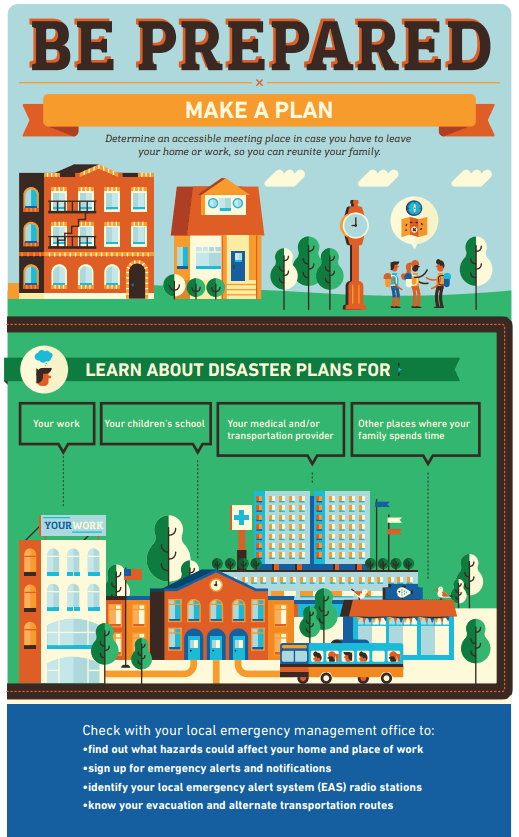
Personal preparedness includes being ready for disasters and emergencies at home, in your car, or anywhere you spend time. It also means preparing for your family members, neighborhood, and pets and knowing the preparedness programs for your children’s school(s) or daycare. Your preparedness needs to consider the needs of children, older adults, people with disabilities, pets, and livestock.
Some basic preparedness tools:
- Create and practice a family communications plan that addresses how you will communicate, evacuate, and meet up when a disaster happens.
- Establish an out of state contact who lives at least 100 miles away as the person family members call to report their location and status.
- Assemble and emergency supplies kit with food, water, cash, battery-operated radio, flashlights, first aid kit, etc. There should be enough supplies for individual family members and pets to last two weeks.
- Prepare critical documents (e.g. insurance policy, medical information) that will help you in recovering from health and property impacts.
Visit the Emergency Resources page for more details and “how to” instructions.
Business Preparedness
Businesses can suffer significant losses because of a disaster or emergency and should also prepare their worksites and employees in how to respond to a fire, cyberattack, power outage and other hazards.
- Conduct a needs assessment to determine the most likely emergencies or disaster that would impact your business.
- Create a continuity plan to manage business disruption.
- Develop communications strategies to keep your employees and customers informed during the event.
- Develop recovery strategies so your business operations can be restored.
Download business preparedness and recovery resources from the Emergency Resources page.
Disaster Recovery
Your preparedness efforts will serve you well when recovery from an emergency or disaster begins. Through the City’s Emergency Management Office, Economic Development Office, Human Services Division, and Community Development Department, staff will connect you with assistance resources and help you with permitting. Other agencies, such as the Federal Emergency Management Agency and U.S. Small Business Administration, offer disaster assistance. Learn more about disaster assistance on our Emergency Resources webpage.